Print Page   |   Sign In   |   Join RCI
RCI Blog
Blog Home All Blogs

Soy Lecithin: The Secret to Your Best Candies Yet

Posted By RCI, Tuesday, March 28, 2023
Updated: Tuesday, September 5, 2023


The sun is shining (hopefully), temperatures are rising, and the smell of spring is in the air—and certainly in your candy kitchen—as you create your delectable springtime confections. RCI member, LorAnn Oils, shares how you can take your chocolates and confections to the next level of perfection with a favorite secret ingredient—soy lecithin!

What Is Soy Lecithin?
Lecithin is an emulsifier used in foods to stabilize other recipe ingredients that do not inherently mix well. This naturally thick extract comes from soybeans and has super-charged emulsification abilities that produce perfectly blended gravies, dressings and sauces. For candy lovers, it’s the qualities lecithin adds to confections that are the cause for excitement!

Benefits of Using Soy Lecithin in Confections
When it comes to the confectionery world, lecithin is used as a natural emulsifier, preservative, antioxidant and flavor protector in chocolates and candies. Two ingredients we know do not live in perfect harmony: oil and water. The ability to keep oils and fats from separating makes lecithin ideal. Think of lecithin as the requisite sidekick for chocolates and buttery candies. Its emulsifying properties improve mixability, which enhances the texture of buttery candies and chocolates, while protecting the flavor. Lecithin’s emulsification magic also keeps candy from developing an oily residue on the outside, giving confections a beautifully smooth finish customers will appreciate.

The addition of lecithin can also extend shelf life thanks to the presence of antioxidants which help to slow the oxidation of fats and control crystallization. This is great news for professional confectioners, because it reduces the risk of mold developing and keeps chocolates, caramels and other buttery candies fresher longer.

Ask your supplier, as some soy lecithin products may be gluten-free and vegan-friendly, making it a perfect option for customers who have special dietary needs. Keep reading for a variety of ways you can use lecithin in the following candy creations.

Chocolates
Incorporating lecithin into melted chocolate can help it flow more smoothly and consistently. Lecithin acts as a binder in chocolate, helping cocoa solids, sugar and milk better adhere to the cocoa butter. Adding just a small amount of lecithin to melted chocolate keeps the chocolate from spreading too quickly so it doesn’t seize or thicken. Lecithin is also a more cost-effective option than cocoa butter and less is needed. Usage recommendation is 0.25 – 0.50% lecithin per total batch. Too much lecithin can have the reverse effect and cause chocolate to thicken.

Caramels, Toffees and Brittles
A common problem for candy makers is the stickiness of their products, particularly in toffee and brittles where the butter and sugar tend to separate during the cooking process. Luckily, lecithin helps to minimize this issue by allowing the butterfat to mix with the moisture in the batch. Lecithin can also help prevent caramels from sticking to their wrappers or wax papers. Usage should be limited to 0.20-0.40% of the total batch to achieve the best results.

Caramel Popcorn
For caramel popcorn, adding a little lecithin and oil at the very end will help your creamy caramel evenly coat the popcorn and reduce clumping.

Cinnamon Candies
When making hard candy, cinnamon oil is a flavor that may not stay completely mixed into the candy syrup and can float to the top. To help the oil stay mixed, stir a small amount of lecithin into the boiled candy syrup. Since lecithin is an emulsifying agent, it helps keep oils evenly mixed and emulsified throughout the batch. We recommend adding 1/4 teaspoon of lecithin per cup of sugar.

When making hard candy, it can be difficult to keep certain flavors, specifically cinnamon oil, evenly mixed throughout the candy syrup. To prevent cinnamon oil from floating to the top of your hard candy mixture, stir in a small amount of lecithin into the boiled candy syrup. As an emulsifying agent, lecithin helps to keep oils evenly distributed throughout the batch. LorAnn Oils recommends adding 1/4 teaspoon of lecithin per cup of sugar.

Now you can see why soy lecithin is a favorite secret ingredient for many candy makers and chocolatiers. Not only does it provide a range of functional benefits, but it also helps to create a smoother, more consistent product with a longer shelf life. With its natural and clean label ingredients, soy lecithin is an easy and cost-effective solution to improve the texture and flavor of chocolates and other confections.

Crave more?Click here to subscribe and start receiving weekly tips, like this, delivered straight to your email inbox. RCI's blog is just one of the many resources we offer to help candy makers refine their craft and build upon their business and marketing practices. Follow us on Facebook for even more sweet inspiration.

Tags:  Brittle  Caramel  Caramel Popcorn  Chocolate  Emulsifier  Ingredients  Lecithin  Popcorn  Shelf Life  Soy Lecithin  Sticky Caramel  Toffee 

PermalinkComments (0)
 

Tips for Making the Best-Ever Batch of Caramel Popcorn

Posted By RCI, Tuesday, August 4, 2020
Updated: Monday, August 24, 2020


August may have just begun, but when you see school supplies fill the store aisles, you know fall is just around the corner.

There's something warm and comforting about caramel corn in the fall--but sticky, clumpy caramel corn is no fun at all! After reading this week's quick tip, you will never want to make caramel corn without this ingredient!

If your caramel corn sticks together and becomes difficult to separate, adding lecithin will help. Randy Hofberger of R&D Consultants advises mixing lecithin with a little oil and adding this mixture at the end of your caramel corn recipe. This will help the caramel spread apart easier and save you the hassle of manually pulling it apart. 

Allergy Alert!

It is advised that individuals with soy allergies do not consume products that contain lecithin. Although lecithin is a byproduct of soy, there is always a chance soy protein will find its way into lecithin. Lecithin derived from sunflower or canola are more allergy-friendly alternatives to soy. 

Don’t cry over spilled lecithin.

Resist the urge to clean spilled lecithin with a damp cloth or spray cleaner, which will cause it to gum-up and make it worse. Instead, cover the spill with sugar and it will clean right up without a sweat.

New Flavor Inspiration

Once you’ve perfected your caramel popcorn recipe, consider experimenting with different flavors and ingredients to take your corn to the next level. Here’s some inspiration for the upcoming fall season.


Bourbon Caramel

Equally suited as a tailgate party snack or a jolly holiday treat, bourbon caramel corn will keep ‘em coming back for more.

Dulce de Leche

Dulce de leche is a South American delicacy made with slow-cooked milk and sugar. A natural fit for caramel corn, it offers a rich, creamy and more complex flavor for your caramel popcorn.


Pumpkin Spice

Is it even fall without pumpkin spice? We don’t think so!

In the past, Starbucks has released their pumpkin spice latte as early as the end of August. Get ready for the craze by introducing pumpkin spice caramel corn for this fall season.

Here’s to making your best batches of caramel corn ever and to a sweet fall season!

Crave more? If you like what you read here, look for the 

Not a member? Click here to learn how RCI can help you build your sweet business.

Tags:  Allergens  Candy Hacks  Caramel  Caramel Corn  Creative Flavors  Fall  Inspiration  Lecithin  Liquor  Popcorn  Problem Candy  Pumpkin Spice  Recipe  Seasonal  Sticky Caramel 

PermalinkComments (0)
 

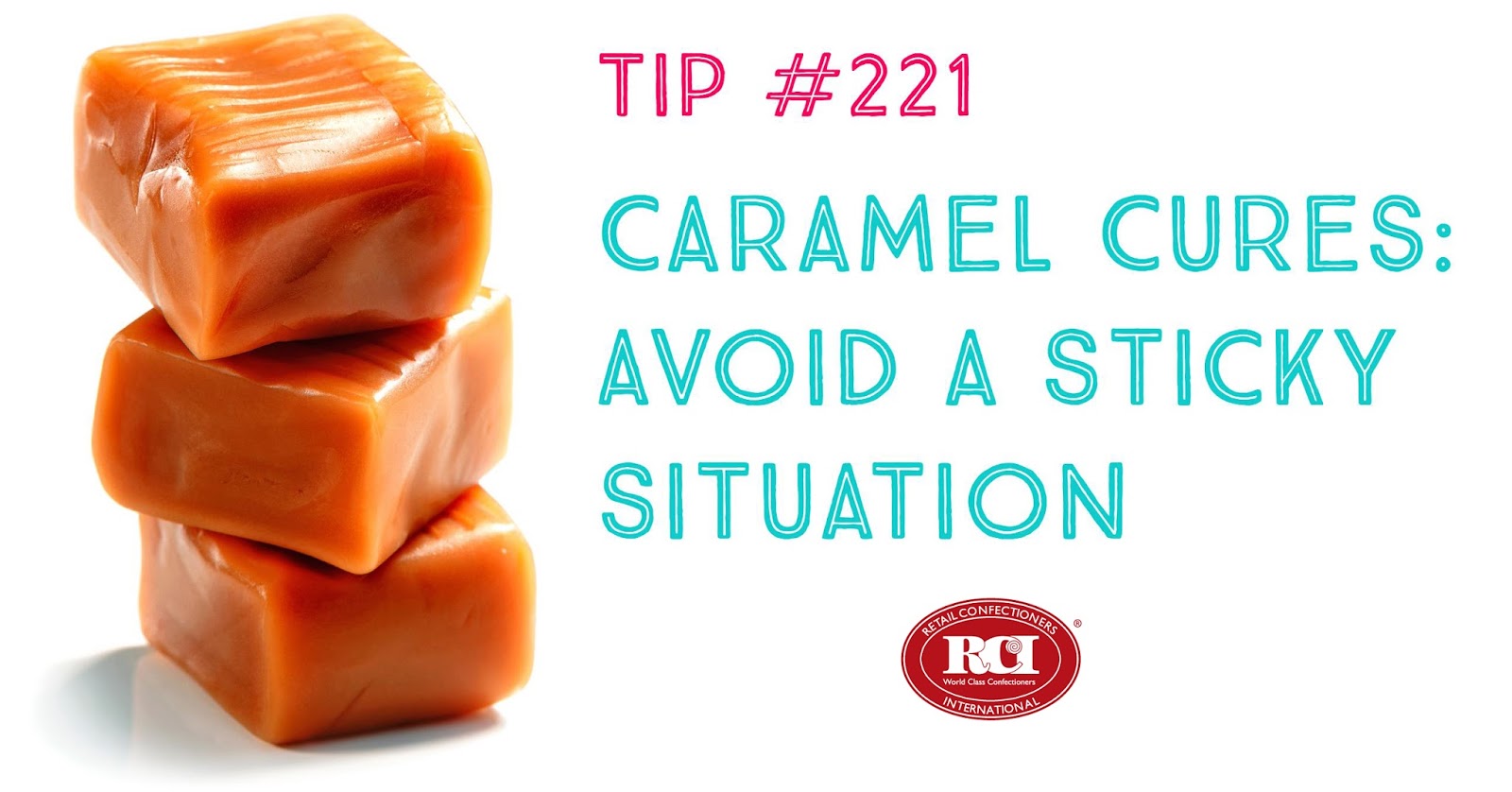
Tip # 221: Caramel Cures: Avoid a Sticky Situation

Posted By RCI, Tuesday, February 14, 2017
Updated: Wednesday, April 29, 2020
Known for its characteristically smooth and chewy texture, caramel is one of the most popular and beloved candies. However, even caramel’s biggest fans are not willing to risk dental work for sticky caramel. If creating an unhappy customer isn’t enough, caramel that is too sticky can also lead to difficulties during the manufacturing process, thus creating a very sticky situation.
 
Below we’ve identified the top seven common causes for sticky caramels and possible solutions, presented at RCI's Caramels, Toffees & Brittles course.

  1. Not enough fat – Increase the percentage of fat and/or the amount of milk being used in the recipe. A minimum of 8% fat is recommended when making caramels. 
  1. Excessive inversion – Inversion occurs when sucrose (a disaccharide) is broken down into glucose and fructose. This can be caused by extended cooking times (especially under acidic conditions) and the use of the enzyme invertase. Increasing reducing sugars will add to the flavor and color of caramel – but too much can cause excessive stickiness.

    Check the pH of premix, water and other ingredients, including scrap, to identify excessive inversion as the problem. Caramel premix should have a neutral pH (6.8-7.0). 
Two possible solutions for adjusting pH levels:
a)     Add low-pH flavors at the end of cook sequence or use buffered flavors.
b)    Increase premix pH with the addition of basic salts, such as sodium bicarbonate, sodium citrate (both considered natural and should be approximately 0.1% of batch)
 
  1. Not enough milk – A minimum of 3.7% milk protein solids or higher is recommended
  1. Low cooking temperature – Increasing the final cooking temperature slightly will produce caramel with a harder texture. Even one or two degrees can make a significant difference. Additionally, do not allow the moisture from the cooking process to drain back into the kettle.
  1. Too much corn syrup – Too much corn syrup can create a tender caramel, but also lead to stickiness and lack of body. Adjust the ratio of sugar to corn syrup (reduce the corn syrup or dextrose equivalent of corn syrup)
  1. Too much humidity – An overly humid environment can make caramel sticky and create a less than desirable layer of scum on its surface. Too avoid exposure to excessive humidity, pack and store cooked caramel away from steam kettles and in an area with a relative humidity of 40-50%.
  1. Lack of emulsifiers – The addition of mono and diglycerides (generally 1-1.25%) will produce caramel that is less sticky.
Great caramel doesn’t happen by accident. With all the factors that play into the science of making caramel, even one or two degrees, for example, can mean the difference between coveted caramels and a sticky mess.
 
Make your customers stick, but not your caramels! Registration for RCI’s Caramels, Toffees & Brittles course opens tomorrow, February 15. This three-day intensive course is designed to help candy makers (RCI members and non-members) understand the science behind recipe formulations and learn troubleshooting techniques for caramels, toffees and brittles. Participants will gain hands-on experience in the kitchen making variations of these coveted confections for several different applications.

Visit retailconfectioners.org/caramels for more information and to register for the course, starting February 15. Note: This course is limited to the first 24 registrants and is expected to sell out quickly.
 

Stay connected with RCI through Facebook for more tips and inspiration dedicated to the retail candy maker. Not a member? Click here to learn how RCI can help you build your sweet business.

Tags:  Candy Making  Caramel  Caramels  Education  Problem Candy  Quality Control  Sticky Caramel  troubleshooting 

PermalinkComments (0)