|
|
Posted By RCI,
Tuesday, October 3, 2023
Updated: Thursday, November 9, 2023
|
Imagine being able to set your email marketing on autopilot. With a little forward-thinking and planning, email automation makes it possible. Email automation is a tool that allows you to create an email or sequence of emails through the use of an email marketing service, such as Constant Contact, MailChimp (available for both free and paid plans) or others. Once the email(s) are created and perimeters are in place (such as the order or frequency you decide), these emails will automatically go out to contacts after they perform a specific action, such as joining your email list or making a purchase. Once set up, automated emails work on autopilot so you can focus on other areas of your business. Create an Automated Welcome Email Series
According to a report by Omnisend, “welcome emails have an average open rate of 45%, versus 18% for promotional emails.” Naturally the first email in a welcome series should thank subscribers for joining your email list. Shopify recommends keeping welcome emails clean and easy to understand, with a brief description of your brand, how you’re different, what you have in common with shoppers and why shoppers should be excited. Make sure details regarding store hours, locations and contact information are accessible by linking to this information on your website or including it in the email footer. Don’t forget to always include a call to action. This may be a link to your website with an invitation to “shop now” or follow your social media pages. For the second email in the series, you should teach readers something. This could include details about your products (e.g., high-quality ingredients, small-batch confections) or something relevant to your product or audience, such as tips for choosing the perfect gift for anyone and any occasion. Your call to action might include a link to a cool video that drives home your message or a coupon or promotional code as a gift for subscribing—just make sure to skip the expiration date since you won’t know when your contact will receive the offer. To make the subsequent emails effective, consider content that will be useful to your audience. Constant Contact suggests using the following questions to determine which information would be most relevant to your audience, as well as the number of emails to include in a series and the frequency of which to send those emails. - What do they want to know?
- What do they need to know?
- What are their needs, problems and challenges?
Answering these questions will help you to develop communication that nurtures and engages with prospective and returning customers. Avoid Time-Sensitive Content
Once you’ve determined which information is relevant to your contacts, make sure to avoid time-sensitive content. Since the dates contacts receive your automated emails will vary based on when they sign up for your email list (or take another action), be mindful not to include information or photos that might become outdated upon receipt—such as specific dates, holidays or seasons. Although much of the beauty of an automated email is that you can “set it and forget it,” don’t forget it entirely. Make plans to review each email periodically to ensure it’s still relevant and current. By investing time upfront to craft a simple, yet effective automated email series, your efforts are sure to pay off by converting more contacts to customers and building customer relationships that lead to lifelong loyalty and brand advocacy. Crave more?Click here to subscribe and start receiving weekly tips, like this, delivered straight to your email inbox. RCI's blog is just one of the many resources we offer to help candy makers refine their craft and build upon their business and marketing practices. Follow us on Facebook for even more sweet inspiration. Not a member? Click here to learn how RCI can help you build your sweet business.
Tags:
Email
email marketing
Marketing
Permalink
| Comments (0)
|
|
|
Posted By RCI,
Tuesday, September 26, 2023
Updated: Thursday, November 9, 2023
|
A thoughtful housewarming gift can help commemorate the special occasion and make new homeowners feel more at home. Offering great housewarming gifts could also open up sales opportunities with local real estate agents looking to thank clients. What better way to welcome someone to the neighborhood than with a delicious and thoughtful gift? This
week we’re sharing inspiration for crafting your own special housewarming gifts that make a lasting impression to both the recipient and the gift giver.
Candy House Box
This cute wooden box is the perfect container to house a sampling of your signature treats. Similar house-shaped wooden boxes, like this, can be found at your local craft store or online. As another option, RCI supplier member, Nashville Wraps, has a few styles of housewarming basket boxes, like the one pictured below.
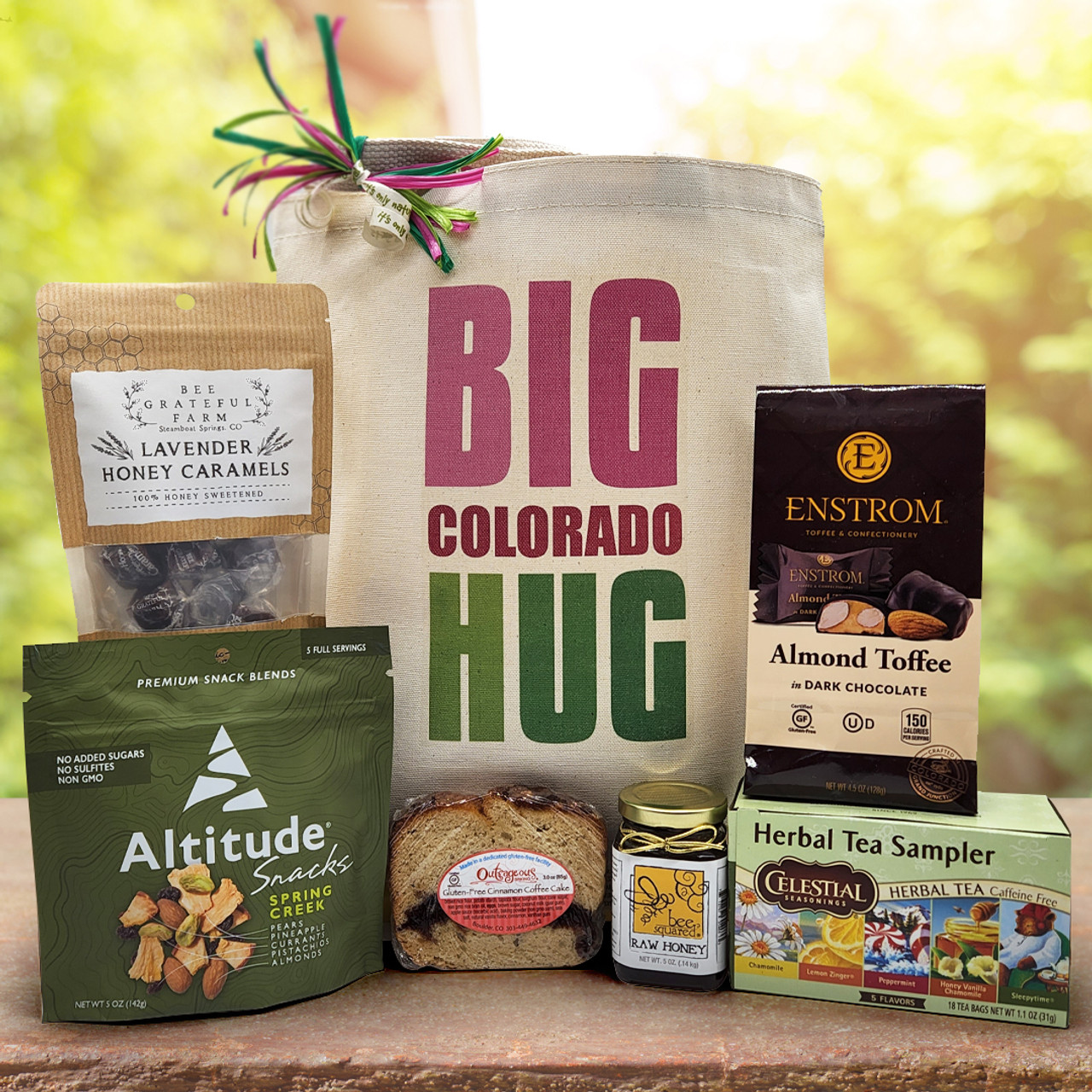
Big Hug Care Package
This gift is sure to make anyone smile! We especially love the custom tote bag that reads “big Colorado hug,” which could be reimagined for your state or hometown. With the addition of your company name or logo, the reusable bag will remind the recipient of your brand every time it's used. This could also be repurposed as a back-to-school send off for college students—“send them to school with their favorite treats!”
Best in State
Welcome new homeowners to the “neighborhood” with a state-shaped basket filled with your signature treats and perhaps some unique-to-your-state flavors. RCI member Buffett’s Candies sources baskets shaped like their home state of New Mexico from
WeaveCrafters. This Texas-based company makes handmade baskets in the shape of all 50 states and are highly recommended by many members.
They also make a house-shaped basket. Click here for a past RCI blog post with more ideas for creating custom gift baskets for your state.
People are always buying and selling homes. This could be your opportunity to introduce your business to out-of-towners and be part of a special milestone for locals who may have just moved across town. Once you find out which presentation works best for your business, it’s important to get the word out! Post photos of your housewarming gifts on social media, ask around if you have a friend who works in the real estate industry or make a memorable introduction at some nearby real estate offices with a sample housewarming gift in hand.
We hope this inspires you to go put the sweet in "home sweet home" with your housewarming gifts!
Crave more?Click here
to subscribe and start receiving weekly tips, like this, delivered straight to your email inbox. RCI's blog is just one of the many resources we offer to help candy makers refine their craft and build upon their business and marketing practices.
Follow us on Facebook for even more sweet inspiration.
Not a member? Click here to learn how RCI can help you build your sweet business
.
Tags:
Gift Baskets
Gift Ideas
gifts
Housewarming
Increase Sales
Marketing
State
Permalink
| Comments (0)
|
|
|
Posted By RCI,
Tuesday, September 19, 2023
Updated: Thursday, November 9, 2023
|
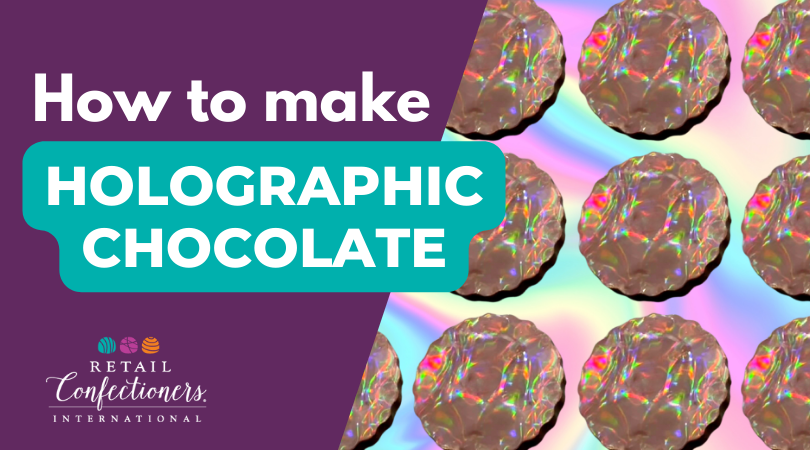
Upgrade your confections with a cool, glimmering hologram. For this week’s blog post, Cargill Cocoa & Chocolate shares a simple technique that gives chocolate a dazzling, rainbow effect without the use of colored cocoa butter or pigments.
How does it work?
A diffraction sheet is made of plastic which consists of micro-etchings, which are tiny grooves that causes white light to disperse into a rainbow of colors. When liquid chocolate meets a diffraction sheet, the chocolate takes on the sheet’s micro etchings as it solidifies. These etchings in the chocolate replicate the dispersion effect of the sheet and separate white light into individual colors, which gives the lovely rainbow effect. When selecting a diffraction sheet (also known as a gradient sheet), the greater the number of lines, the more of an opportunity for the light to diffract and give a stronger iridescent look. Diffraction sheets can be found from a number of online retailers, such as Amazon.
How to do it?
There are a few ways to make this dazzling design.
The first, is using a magnetic transfer mould. Place the diffraction sheet into your transfer mould, similar to how you would use cocoa butter transfer sheets or other traditional design applications. Once placed, proceed to pour tempered chocolate into your mould. Be sure to knock the air out of the mould to ensure a seamless transfer of the design. When the chocolate cools, the liquid will mould around the micro etchings allowing the rainbow shimmer to be present on your chocolate.
Another method is to apply chocolate directly to the diffraction sheet. The easiest way to utilize the sheets directly is to slightly melt the top of an already moulded or enrobed product, place the melted side onto the diffraction sheet and let it cool. This way you can design items that have already been completed, like chocolate chip bottoms or chocolate enrobed cookies. Chocolate can also be poured directly onto the gradient sheet. When slightly cooled, the diffraction sheet can be bent or curled to add a shimmer to chocolate curls or tubes.
As discussed above, you aren’t transferring the design but instead, transferring the grooves into the chocolate. Because of this, the sheets can be used multiple times. As long as the micro etchings are clear, the design can continue to be moulded onto the product. Gently wash the sheet with soap and water after use. Make sure that the sheet is completely dry before the next use. A dry wipe down can also be completed between batches.
How can it be applied?
There are an endless number of ways to apply this shimmering design. Moulded truffles, chocolate curls, and enrobed treats can be elevated with holographic effects. The possibilities are only limited to your glittering imagination!
Crave more?Click here
to subscribe and start receiving weekly tips, like this, delivered straight to your email inbox. RCI's blog is just one of the many resources we offer to help candy makers refine their craft and build upon their business and marketing practices.
Follow us on Facebook
for even more sweet inspiration.
Not a member? Click here to learn how RCI can help you build your sweet business
.
Tags:
Chocolate
Decoration
Holographic Chocolate
Trends
Permalink
| Comments (0)
|
|
|
Posted By RCI,
Tuesday, September 12, 2023
Updated: Thursday, November 9, 2023
|
As we all know, nutritional labeling can be a nightmare at times for one reason or another. In recent years, RCI member Dietsch Brothers has incorporated QR codes onto some of their smaller products instead of trying to cram all the ingredient information on a tiny packaging space. According to the FDA, if your labeling area is less than twelve square inches you can include a phone number or address to access the nutritional information for that product. On small packages such as chocolate-covered sandwich cookies, four-piece boxes, graham crackers and etc., Dietsch Brothers provides a QR code on the label, along with contact information, so customers can link to the product on their website for consumers to find the nutritional and allergy information. By including QR codes, which most people are familiar with post-COVID, it helps drive traffic to their website and allows the candy maker to share the ingredient information in an easy-to-read format. Setting up QR Codes are Easy
There are two different types of QR codes that should be considered when creating one for packaging. A static QR code cannot be changed, so once setup the URL it is linked to it cannot be changed. If you set up a dynamic QR code, the URL it links to can be modified at any time. A dynamic QR code also allows you to track how many times that code has been scanned. Trusted QR Code Generators Canva | Canva offers a static QR code generator for free and paid users. Customization features are limited to changing the background and foreground colors. QR Tiger |Dietsch Brothers uses QR Tiger to create dynamic QR codes. QR Tiger offers fully customizable QR codes, which includes the ability to incorporate your logo. Monthly rates start at $7/month. QR Tiger also integrates with Canva to import your dynamic codes to be used in your Canva designs. QR codes are an easy and low-cost solution for providing product information for consumers, especially when it comes to small packaging. By incorporating QR codes onto packaging, companies can not only provide product information, but also drive traffic to their website and increase brand recognition. Crave more?Click here to subscribe and start receiving weekly tips, like this, delivered straight to your email inbox. RCI's blog is just one of the many resources we offer to help candy makers refine their craft and build upon their business and marketing practices. Follow us on Facebook for even more sweet inspiration. Not a member? Click here to learn how RCI can help you build your sweet business.
Tags:
Labeling
Nutrition Labels
QR Codes
Small Packaging
Technology
Permalink
| Comments (0)
|
|
|
Posted By RCI,
Wednesday, September 6, 2023
Updated: Thursday, November 9, 2023
|
 Long before pumpkin spice lattes were a thing, spiced apple cider was quite possibly the undisputed official beverage of fall. While pumpkin spice can be found nearly everywhere this time of year, there are still some of us who look forward to tracking down high-quality apple cider at the local farmers’ market or a roadside farmstand. Together the fresh apple flavor paired with the aroma of warming spices elicits all the cozy feels. Before apple month draws to a close, we pay homage to the regal apple with apple cider infused confections. Cider Spiced Candy Apples Put a fall spin on your candy apple recipe by adding apple cider to your recipe—or try this recipe on for size. This could also be applied to caramel apples by making an apple cider caramel. Check out this recipe for apple cider caramels. Apple Cider Caramel Popcorn
The addition of spiced apple cider brings a welcome depth of flavor to any caramel recipe—including caramel popcorn. Spiced Cider Fudge
This easy white chocolate fudge is flavored with apple cider and pieces of toffee for texture. We hope you enjoy this post! If you try any of these recipes or would like to share photos of your favorite apple cider infused confections on Facebook, tag us @retailconfectioners. Crave more?Click here to subscribe and start receiving weekly tips, like this, delivered straight to your email inbox. RCI's blog is just one of the many resources we offer to help candy makers refine their craft and build upon their business and marketing practices. Follow us on Facebook for even more sweet inspiration. Not a member? Click here to learn how RCI can help you build your sweet business.
This post has not been tagged.
Permalink
| Comments (0)
|
|
|
Posted By RCI,
Tuesday, August 29, 2023
Updated: Tuesday, September 5, 2023
|
While honey has been used as a natural sweetener for centuries, it has recently been gaining popularity as a trend to watch in a number of categories, including the confectionery industry. Candy & Snack named honey as a naturally occurring sweetener flavor trend in 2023 and a real food ingredient that fulfills a sweet craving in a pure form. And according to
Prepared Foods, candy that is naturally sweetened is a “key growth area” for 2023.
If this leads you to question whether or not to add honey to your confections and chocolates, RCI member Hector Camargo Jr. with ChocolatesU, LLC helps shed some light on the query. Keep reading for an overview of the benefits of using honey in your confectionery creations, as well as some potential drawbacks to keep in mind.
Drawbacks to Using Honey
Cost
Honey is expensive. You can expect to pay between four to 10 times more per pound for honey compared to other sweeteners like glucose syrup and refined sugar.
Variability
Honey is a natural product, which means variability is the name of the game. Physical properties (color, moisture), chemical properties (pH, mineral content, impurities) and most importantly taste, can all vary with the seasons and flowers the bees choose to visit. Your perfect honey ganache can suddenly have an off, bitter note or your prized honey caramel could go grainy and gritty at random intervals leaving you guessing at the cause. Mineral content changed? Is the pH off?
Temperature Sensitivity
Honey is also temperature sensitive. Too hot and it flows everywhere; too cold and you might as well take a nap and wait for the spring thaw. Crystallization can occur during storage, especially if your storeroom is cold. And while the crystallization is easily reversible with gentle heating, it could put a kink in your production plans for that day.
Risk of Counterfeit
All this is assuming you are using real honey. That’s right, counterfeit honey is a real thing. Without a reliable, trusted source, you could be paying a premium for pricy sugar syrup.
Not Vegan Friendly
And finally remember, honey is NOT vegan (
unless you know a fair-trade bee colony that accepts purchase orders).
Benefits of Using Honey
Shelf-Life
Honey does not go bad. The oldest known sample of honey was found in an ancient Egyptian tomb dated at 3,000 years old and is supposedly still edible. Honey’s low water activity and low pH (around 4) makes it, and the items made with it, resistant to spoilage and mold.
Invert Sugar
Honey is an amazing invert sugar syrup and can be used directly as a confectionery ingredient. Like other invert sugars, honey helps control crystallization and creates a smooth mouth feel. Honey is hygroscopic, so it reduces the water content in confections while prolonging shelf life. Honey’s humectant properties also keep chocolate fillings and fudge supple and baked goods tender.
Flavor
Honey has a unique flavor, but that can be as prominent or as muted as you wish depending on the type of confection you are creating.
All-Natural Sweetener
Honey is a customer delight. Sweeten with cane, coconut, or palm sugar and patrons will respond with a yawn. Honey, however, connotes the idea of “natural” to consumers. Even if honey is not the exclusive sweetener in your products, it will hold a certain cache with your customers and differentiate you from competitors.
Honey is costly and can be a challenging ingredient. It requires some patience and experimentation to use successfully. Whether or not you opt to start using a spoonful of honey in your confections, we hope this week’s blog post was insightful.
Crave more?Click here
to subscribe and start receiving weekly tips, like this, delivered straight to your email inbox. RCI's blog is just one of the many resources we offer to help candy makers refine their craft and build upon their business and marketing practices.
Follow us on Facebook for even more sweet inspiration.
Not a member? Click here to learn how RCI can help you build your sweet business
.
Tags:
Honey
Ingredients
Trends
Permalink
| Comments (0)
|
|
|
Posted By RCI,
Tuesday, August 22, 2023
Updated: Tuesday, September 5, 2023
|
We all know even the very best confections don’t stay fresh forever, but did you know your choice of packaging could either be helping or hindering your fight for freshness? While packaging is often selected for visual appeal, it can impact the shelf life of your products.
Understanding how packaging affects shelf life can help you better serve your customers and your bottom line. As the final post of this series, we’ll continue to share insight from RCI member Randy Hofberger of R&D Consultants on how to prolong the shelf life of your confections with the right packaging.
Missed the first two posts? Read Part 1, followed by Part 2.
This week we’re exploring the effects of moisture on confections and what to look for when sourcing barrier packaging that can keep crunchy products crisp and soft items from becoming dry
—plus, tips for avoided unwanted moisture when shipping products.
Managing Moisture
Like with light and oxygen, moisture can wreak havoc on confections. No consumer wants soggy brittles and toffee or dry truffles and creams. Even worse, the presence of excessive moisture can create a breeding ground for bacteria and mold.
A good moisture-barrier film can play double-duty by retaining existing moisture while also keeping unwanted moisture out. Ask your packaging supplier to share the oxygen and moisture permeability values for their products. According to Randy, foil is an excellent barrier for both oxygen and moisture; cellophane is fairly good; polyethylene is fairly good for moisture, but it is poor for oxygen. Watch out when packaging products in shrink wrap or a cardboard stock box, as these materials are basically providing dust covers and not a lot of protection from moisture and oxygen.
Many films have layers to give the best protection and visual appeal. This is often seen in flow-wrapped items. The bars can be cohesively sealed (cold flow) or heat sealed. If heat sealed is used, be mindful that excess heat is not used to de-temper the chocolate. Metalized wrap offers great protection, but has the disadvantage of not being metal detector friendly.
Shipping Considerations
When shipping or distributing items, acknowledge that conditions may be different than on your premises and are out of your control. It is always good to specify the target temperatures and relative humidity to your distributor. If shipping items with ice packs, it is best to wrap both the ice packs and the confections to prevent damage due to condensation.
We want our customers to enjoy the wonderful candies that we have created. This requires a candy that is tasty to begin with; it is formulated to have a good shelf life for texture, flavor and micro stability; it is sold and consumed within its shelf life and finally the candies and the packaging are appealing to all. This will result in having satisfied customers and continued strong sales.
Crave more?Click here
to subscribe and start receiving weekly tips, like this, delivered straight to your email inbox. RCI's blog is just one of the many resources we offer to help candy makers refine their craft and build upon their business and marketing practices.
Follow us on Facebook for even more sweet inspiration.
Not a member? Click here to learn how RCI can help you build your sweet business
.
Tags:
Packaging
Shelf Life
Shipping
Permalink
| Comments (0)
|
|
|
Posted By RCI,
Tuesday, August 15, 2023
Updated: Tuesday, September 5, 2023
|
We all know even the very best confections don’t stay fresh forever, but did you know your choice of packaging could either be helping or hindering your fight for freshness? While packaging is often selected for visual appeal, it can impact the shelf life of your products.
Understanding how packaging affects shelf life can help you better serve your customers and your bottom line. As part two of a three-week series, we’ll continue to share insight from RCI member Randy Hofberger of R&D Consultants on how to prolong the shelf life of your confections with the right packaging. Missed last week? Scroll down or click here to read it first.
This week we’re exploring how to slow rancidity caused by exposure to oxygen. Oxidative rancidity happens when oxygen and unsaturated fats produce rancid odors and flavors. Having a good oxygen barrier coating will reduce oxygen from entering the package. However, a good oxygen barrier is only affective if the packaging is properly sealed. Additionally, if there is oxygen in the head space of the package, oxidative rancidity can still occur.
Test your seal
The best packaging doesn’t mean much unless it is properly sealed. Packaging should be evaluated to make sure there is proper seal integrity. While there are more sophisticated tests, a simple squeeze of a sealed bar will indicate that you are doing things right if the packaging stays “puffed.” Twist wrapped items don’t have a lot of protection unless there is an outer bag or container to keep things sealed.
Toffee is generally more susceptible to oxidative rancidity, which is why it is often nitrogen flushed or vacuum sealed to exclude oxygen from the package. Having a good oxygen barrier also helps prevent off-odors from entering your packaging (think when lemon candies are placed next to coffee or mint-flavored candies). Also, a good oxygen barrier package will reduce the amount of flavor notes leaving the package.
Take a Control Sample
How do you take a control sample to see if your packaging is the cause of a shorter-than-desired shelf life? First, place finished product into a sealed plastic bag and then into a sealed glass jar or container. Next, compare it to the shelf-life of your standard packaged product on a regularly scheduled basis. If there is a significant difference in how quickly your product ages in your standard packaging, it may be time to make a change to your packaging.
As was discussed in the previous blog post, limiting exposure to sunlight can prolong shelf life, as will reducing oxygen exposure and adding an oxygen barrier to your packaged products. Next week, we will explore how to utilize packaging to slow the effects of moisture exposure, plus compare the efficiency of different materials as barriers for both moisture and oxygen.
Crave more?Click here to subscribe and start receiving weekly tips, like this, delivered straight to your email inbox. RCI's blog is just one of the many resources we offer to help candy makers refine their craft and build upon their business and marketing practices.
Follow us on Facebook for even more sweet inspiration.
Not a member? Click here to learn how RCI can help you build your sweet business
.
Tags:
Packaging
Shelf Life
Permalink
| Comments (0)
|
|
|
Posted By RCI,
Tuesday, August 8, 2023
Updated: Tuesday, September 5, 2023
|
You have just made some of the best confections known to Candydom, but you also know that fresh-from-the-kitchen flavor doesn’t last forever. What’s a candy maker to do? Understanding how packaging affects the shelf life of your confections can help you better serve your customers and your bottom line. In part one of this three-week series, we’re sharing insight from RCI member Randy Hofberger of R&D Consultants on how packaging can positively or negatively affect the shelf life of your products.
While packaging is often selected for visual appeal, it can impact the shelf life of your products. When choosing packaging, factors like light, oxygen and moisture can significantly reduce the shelf life of your products. This week we’re exploring the effects of light and how two different types of packaging could be helping or hindering your fight for a longer shelf life.
How Light Affects Shelf-Life
Exposure to light can reduce the shelf life of confections by causing photolytic oxidation to occur when ultraviolet (UV) light reacts with unsaturated fats to develop off-flavors.
While the sun is the strongest source of UV radiation, fluorescent lightbulbs produce a considerable amount of UV radiation—albeit
far less in comparison to sunlight. As a general rule, the hotter the filament, the more UV it produces. LED and incandescent bulbs produce the least amount of UV.
Which Packaging Beats Harmful Rays?
Opaque packaging can offer some protection from the effects of light/UV, moisture and odors.
Clear packaging has the advantage of allowing the consumer to see what they are buying; however, it has the disadvantage of allowing photolytic oxidation to occur. Clear packaging will also, in certain cases, cause bleaching/fading of colored coatings or white chocolate.
Ironically, the clear solution is not clear at all—because it's opaque!
If you’re lucky enough to have lots of natural light in your retail shop, it may be in your best interest to invest in opaque packaging to protect your products from the sunlight. With that said, we're not against clear
packaging by any means! If you do opt to use clear packaging, or packaging with a clear window, keep sunlight exposure to a minimum to help maximize the shelf life of your products.
Next week, we will explore how to utilize packaging to slow the effects of oxygen exposure, plus a simple way to test the effectiveness of your packaging.
Crave more?Click here to subscribe and start receiving weekly tips, like this, delivered straight to your email inbox. RCI's blog is just one of the many resources we offer to help candy makers refine their craft and build upon their business and marketing practices.
Follow us on Facebook for even more sweet inspiration. Not a member?
Click here to learn how RCI can help you build your sweet business
.
Tags:
Packaging
Shelf Life
Permalink
| Comments (0)
|
|
|
Posted By RCI,
Tuesday, August 1, 2023
Updated: Tuesday, September 5, 2023
|
It’s a Barbie™ world! Fans of all ages are tickled pink for the new Barbie movie! Here’s some ideas and inspiration for creating your own Barbie-approved treats.
Barbie’s Candy Salad
While the only thing actually reminiscent of a salad is the bowl it is served in, this shockingly sweet combination of pink candies and gummies coined “Barbie Candy Salad” has created quite the buzz on social media.
Invite customers to build their own candy salad mix by gathering all your Barbie-inspired treats for a pink-a-tastic display. RCI member, Savannah’s Candy Kitchen created this TikTok video to illustrate how fans can visit their store to make the “Ultimate Barbie Mix.”
Chocolate Princess Barbie
She really can be anything…even chocolate! Sarris Candies has crafted a moulded chocolate Princess Barbie, complete with sugar roses and a pink bow. And that box is everything!
When it comes to Barbie-themed treats, pralines probably aren’t the first thing that come to mind. This is why we love this Facebook post from RCI member River Street Sweets! With some strategic hot pink, a glitter starburst and pink roller skates they have transformed their signature pralines into a treat so sweet Barbie, herself, wouldn’t be able to resist!
With the popularity of the new Barbie movie, we don’t think the Barbie craze is going to fizzle out anytime soon! Look for ways to appeal to Barbie fans of all ages to continue celebrating this iconic doll through watch parties, birthday parties and other celebrations! Whether it’s a pop of pink or a generous sprinkle of (edible) glitter, presentation goes a long way!
Crave more?Click here
to subscribe and start receiving weekly tips, like this, delivered straight to your email inbox. RCI's blog is just one of the many resources we offer to help candy makers refine their craft and build upon their business and marketing practices.
Follow us on Facebook for even more sweet inspiration.
Not a member? Click here to learn how RCI can help you build your sweet business
.
Tags:
Chocolate
Creative
Trends
Permalink
| Comments (0)
|
|
 Print Page
 Blog Home
 All Blogs
 RSS
RSS