Print Page   |   Sign In   |   Join RCI
RCI Blog
Blog Home All Blogs

Are your packaged products FDA compliant?

Posted By RCI, Wednesday, January 26, 2022


Requirements for the nutrition facts label on packaged foods were updated in 2016 to help make it easier for consumers to make better informed food choices. As a producer or seller of food products, businesses of all sizes are now responsible for listing the contents of their products. Unfortunately, with an extensive list of updates to the nutrition facts label, plus a global pandemic thrown into the mix, meeting the requirements has not been an easy task for many manufacturers over the last few years.

Although the FDA announced it would work cooperatively with manufacturers, as of February 2021 (read more), it’s important your business is compliant and prepared for the FDA to begin enforcing label requirements. Keep reading for a refresher on such requirements, as well as answers to common questions and actionable steps to ensure your nutrition labels are compliant.

The what if?

If a new customer comes into your store and purchases a product without a label on it, how are they to know if it contains potential allergens? If they are allergic to an ingredient that is not listed, who’s at fault, the consumer or business? A food label with proper nutritional information serves as insurance to the business, and also notifies the consumer of a potential health risk. Without proper labeling, similar items can get shuffled on a shelf and become a guessing game of what’s inside.

Who needs it?

All too often business owners believe they are too small in production volume to require labels on their products. However, if you are selling product to a customer that they can pick up and bring to the register, the product must be labeled for the protection of the consumer and your business. Proper labeling must include a product name, ingredients/allergen statement, sell by date, and weight using a minimum of 6-point font. Well-labeled products allow the consumer to make an educated decision on whether the product will adversely affect their health by consuming it.

FDA Nutritional Label Changes in Effect

Manufacturers with $10 million or more in annual sales were required to update their labels by January 1, 2020; manufacturers with less than $10 million in annual food sales were required to update their labels by January 1, 2021.

The FDA website provides an in-depth explanation of the new nutrition label requirements, but for now, here are the important points producers need to know to ensure they are on the right path to label compliance.


Pictured above is the original nutrition facts panel on the left and the revised issue. Notable changes include larger serving sizes, added sugars and a footnote defining daily value.

FDA Nutrition Label Revision Explained:

Easy Access to Information


  • The well-known look of the nutrition label will remain the same, but important updates will be made to ensure consumers have all the information they need to make mindful decisions about the food they buy. These changes include increasing the type set size for data like calories per serving and serving size.
  • Food producers will be responsible for declaring the actual serving amount and percent daily values like calcium, vitamin D, iron and potassium.
  • The label footnote will be revised to better define what daily value means, “The % Daily Value (DV) tells you how much a nutrient in a serving of food contributes to a daily diet. 2,000 calories a day is used for general nutrition advice.”


Serving Size vs. Package Size


  • Certainly, one of the most interesting changes to the FDA nutrition label updates is the serving size requirements. Until recently, serving sizes were determined based on amounts of foods and beverages that people “should” be eating. Moving forward, nutrition label updates must reflect the amount of food people are “actually” eating. Serving sizes have changed since they were suggested and published in 1993, with individuals eating larger single-serving portions.
  • Many packaged foods are generally consumed in a single serving, though intended for several servings. The FDA requires packaged foods to list nutritional information for the total consumable package, apart from the recommended serving size. An example of multi-serving products generally consumed in a single serving would be “Big Grab” potato chips and packaged nuts. This new label format is termed “dual column” and aims to help consumers better understand portion sizes.


Next Steps: Reviewing & Editing Your Labels

Reviewing your product labels may seem like a daunting task depending on the number of items that you produce. It’s important to review any recipes that have changed in the past, or ingredients that have been substituted to make sure that they match on the label. Review and edit your labels in small groups to make the process of additions and revisions much more manageable. Here's some more tips to consider while updating your labels:


  • Make sure each label is legible, ingredients should not be hidden or use smaller than six-point font.
  • MUST HAVES: product name, net weight, sell by date, and ingredients that can be clearly read.
  • Items do not have to be labeled if a product is being served to the customer from behind/over the counter.
  • Software is available that will allow you to input recipes and ingredients to produce a nutrition fact panel. Look for software that is compatible with your current method of printing labels.
  • Shelf talkers, or product information listed on the shelf is not a viable means of labeling products. This refers back to items being shuffled on shelves.
  • Being transparent with customers on ingredients and contents is always a best practice.


Applying an accurate and up-to-date label to your products will not only help you remain in good standing with the FDA, but also help strengthen your brand and provide your customers a sense of security.


Crave more?Click here to subscribe and start receiving weekly tips, like this, delivered straight to your email inbox. RCI's blog is just one of the many resources we offer to help candy makers refine their craft and build upon their business and marketing practices. Follow us on Facebook for even more sweet inspiration.

Not a member? Click here to learn how RCI can help you build your sweet business.

Tags:  FDA  Nutrition Labels  Owning a Business  Packaging 

PermalinkComments (0)
 

5 #Adorbs Ideas to Transform Treats for Valentine’s Day

Posted By RCI, Tuesday, September 21, 2021
Updated: Wednesday, October 13, 2021


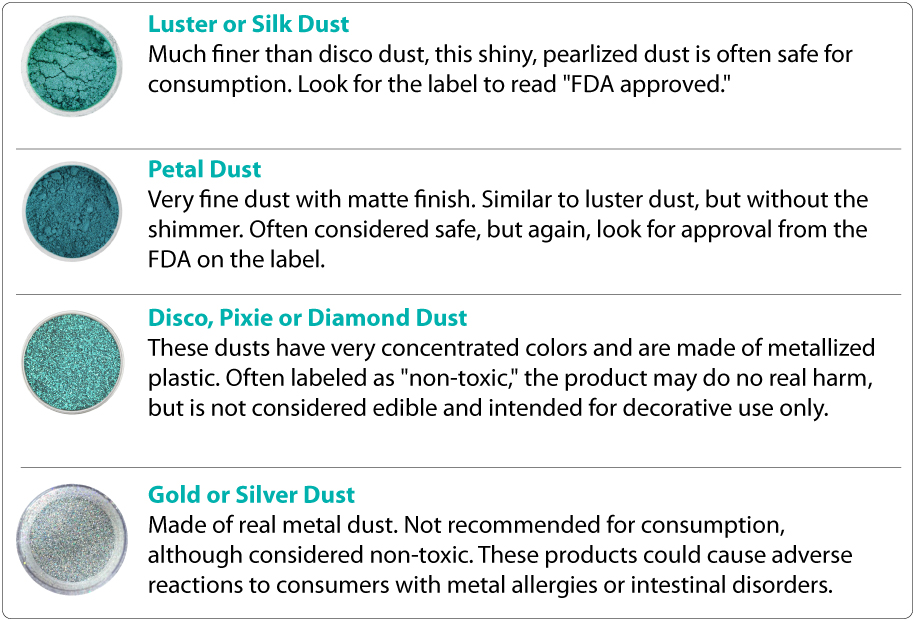
Ever wonder if those shimmery and glittering powders are really edible? Learn what's safe for consumption and what to look out for when sourcing dusting colors.

However eye-catching, not all colored dusts are created equal...or edible. There are very glittery, colorful products meant for crafts, yet packaged and marketed for the confectionery industry. Commonly labelled as “Disco Dust” and “Pixie Dust," these products are actually tiny bits of metallized plastic that should not be consumed.

Understanding Dusting Colors


Is "non-toxic" considered safe?

No, "non-toxic" just means the product is not poisonous—think Play-Doh or crayons. Always read product descriptions and understand common buzzwords.

Good = "FDA Approved" or "Food Product"

Bad = "Non-Toxic" or "For Decoration Only."

Nothing adds glitz and glam quite like dusting colors, but not all are safe for consumption. When sourcing safe dusting colors, it’s important to look for products that are FDA approved.

Crave more?Click here to subscribe and start receiving weekly tips, like this, delivered straight to your email inbox. RCI's blog is just one of the many resources we offer to help candy makers refine their craft and build upon their business and marketing practices. Follow us on Facebook for even more sweet inspiration.

Tags:  Diamond  Disco  Dusting Colors  Edible  FDA  Gold  Luster  Petal  Pixie  Silk  Silver 

PermalinkComments (0)
 

Throwback Tip #230: Refresh Your FSMA Knowledge

Posted By RCI, Tuesday, April 24, 2018
Updated: Monday, April 27, 2020

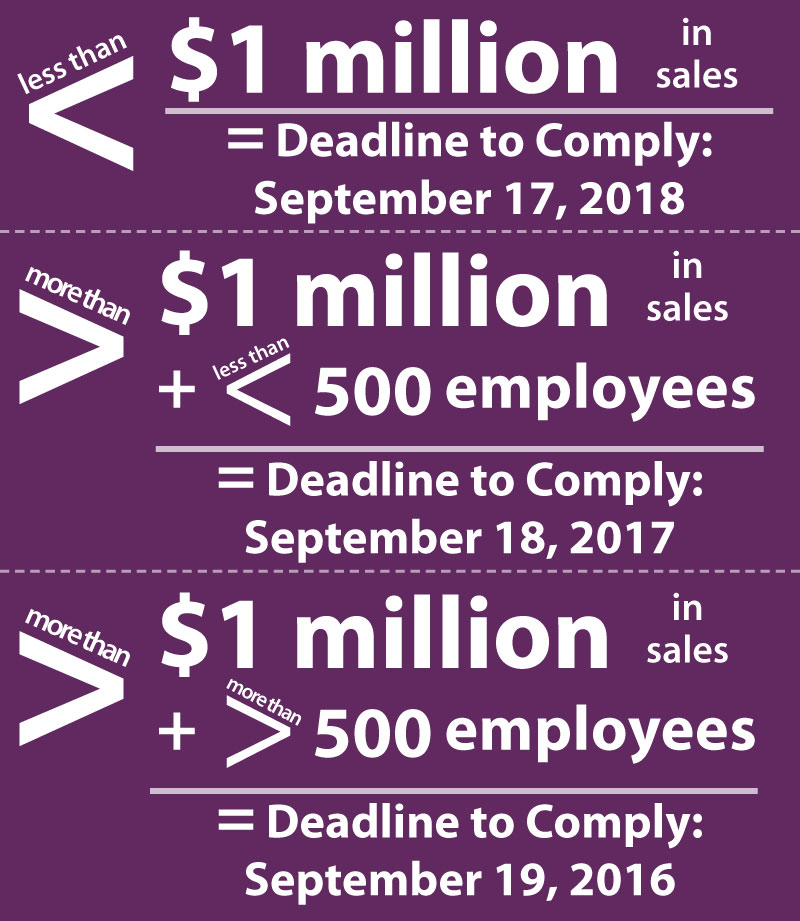
It has been seven years since the Food Safety Modernization Act (FSMA) was signed into law, which also means if you manufacture food and operate with less than $1 million in sales, September 17, 2018 is the deadline to comply with the FDA's regulations. This week's tip offers a refresher on FSMA and its requirements in an excerpt from an article written by Michael Koch of Morley Candy Makers/Sanders Candy for RCI's Kettle Talk magazine.
Click herefor further clarification on compliance dates.
WHAT IS FSMA?
FSMA was designed to shift the focus on food safety from responding to contamination issues to a more proactive approach of preventing contamination before it happens. Through the passing of this law the FDA has gained more leverage in its ability monitor and control the safety of our food supply chain.

In September of 2015 the FDA published its "Preventive Controls for Human Food" guidelines. As part of FSMA, it outlines the mandatory requirements being placed on all food manufacturers to have and implement a written food safety plan.

Before putting a plan together, first, identify the individual or individuals in your organization that are going to administer your program. FSMA requires that your plan be written and managed by a qualified individual. Currently the only way to verify that an individual is qualified is to have your food safety administrator attend a certification course.

IDENTIFY HAZARDS

Hazard Analysis and Risk-Based Preventive Controls (HARPC) is a documented food safety program that you need to develop and implement for your facility. The first step toward developing a HARPC is to conduct a hazard analysis for every food product you handle in your facility—this is not limited to the items that you manufacture. The second step is to put in place preventive controls for each food product to ensure it will not become contaminated and unfit for human consumption.

VERIFY PLAN’S EFFECTIVENESS

 
Verifying the effectiveness of your plan ensures preventive controls are consistently implemented and sufficient. Verification includes evaluating the accuracy of process monitoring, calibrating instruments, such as thermometers, and reviewing records to verify monitoring and corrective actions are completed. Product testing and environmental monitoring by a certified third party are also reliable verification methods.

CREATE RECALL PROCEDURES
Your plan must contain details on your recall procedures. If a contaminated product is shipped, you must be able to identify where the product has gone and have the ability to perform a recall. A recall plan should include the procedures for identifying the contaminated product. Having important contact information in the plan will help move the process forward. Contacts should include the local health department, local FDA office, news media and anyone else that you may deem important to the process.
 
FSMA covers a much greater spectrum of the food chain and more details than covered in this brief post. The realm of information and procedures that you are responsible for also cover such things as your supply chain management, good manufacturing practices, corrective actions and etc. The FSMA is no small task and it is designed to protect the consumer from obtaining contaminated products.
 
In order to operate a successful candy making business, it is essential that you are knowledgeable on federal regulations and take the proper action to ensure you are in compliance with FSMA guidelines. Click here for more resources and updates.          
 
Stay connected with RCI through Facebook for more tips and inspiration dedicated to the retail candy maker. Not a member? Click here to learn how RCI can help you build your sweet business.

Tags:  Chocolate Production  FDA  Food Safety  FSMA  GMP's  Manufacturing  Owning a Business 

PermalinkComments (0)
 

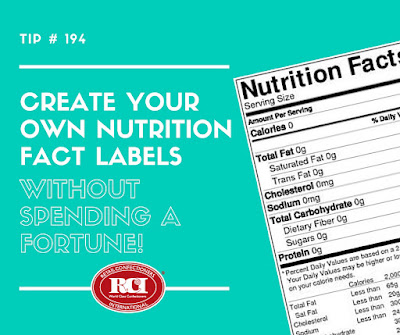
Tip # 194: Create your Own Nutrition Fact Labels

Posted By RCI, Tuesday, April 26, 2016
Updated: Wednesday, April 29, 2020
Get answers to even the trickiest questions directly from confectionery professionals through RCI’s List Serve.
Get answers to even the trickiest questions directly from
confectioneryprofessionals through RCI’sList Serve.

So, your business is required to provide nutrition fact labels for your products. Whether you’re looking for a solution or reconsidering your current solution, you can create your own FDA-approved nutrition fact labels without spending a fortune. Read the following recommendations from fellow candy makers through RCI’s forum, List Serve.
 
“My state health department offers a free service. I gave them my ingredients, package size and serving size and they built complete nutritional labels.”   - W. Lewis, Chiammaya Custom Crafted Chocolates
 
NutraCoster is a good program for creating nutritional and ingredient information panels. Another good one is Genesis R&D by ESHA Research. Both of these programs have generic ingredients to add, but you have the ability to use specific information on ingredients like chocolate.” – M. Koch, Morley Candy Makers/Sanders Candy
“We use NutraCoster as well and like it okay, but I just learned about ReciPal, who will do individual recipes for $19. They also have monthly plans.”   – B. Pelletier, Kakao Chocolate

Not sure if your business is required to provide nutritional information for your products? Click here to learn about the FDA’s requirements for nutrition labeling.
 
Get answers to even the trickiest questions directly from confectionery professionals through RCI’s List ServeRCI members: click here to post your own questions or subscribe to daily digests and threads. Not a member? Click here to learn how RCI can help you build your sweet business.

Tags:  FDA  Idea Sharing  List Serve  Member Recommendations  Nutrition Labels  Owning a Business  Packaging 

PermalinkComments (0)
 

Tip # 184: Register Your Business with the FDA

Posted By RCI, Tuesday, February 16, 2016
Updated: Wednesday, April 29, 2020

In an effort to protect the public and ensure safe food is provided by food manufacturers, the United States Food and Drug Administration (FDA) requires registration of all food manufacturing facilities. These regulations are part of the Food Safety Modernization Act enacted in 2011. We’ve provided answers below to some common FAQs regarding registering with the FDA.
 
Why is food facility registration a requirement?
Food facility registration will help the FDA determine the location and source of a potential outbreak of food-borne illness and quickly notify facilities that may be affected.
 
Who has to register?
The registration requirements apply to food facilities that manufacture, process, pack or hold food for human and animal consumption in the United States. Therefore, if you are a facility making chocolates and candies, then you should be registered with the FDA.
 
Do I register one time?
Food facilities are required to submit an initial registration to the FDA only once. After that, you must renew registration with the FDA every other year during the period beginning on October 1 and ending on December 31 of each even-numbered year. This means every food facility should be renewing their registration this year as 2016 is an even-numbered year.
 
Do I have to resubmit all information to renew?
FDA will provide an abbreviated biennial registration renewal process for a registrant of a facility that has not had any changes to its registration information.
 
Does it cost to register? There is no fee for registration or updates to a registration.
 
How do I register? Register online at FDA.gov by entering a search query for “Registration of Food Facilities,” or request the paper materials by calling 800-216-7331 or 301-575-0156.
 
How is registration confirmed? After you register your facility, the FDA will confirm the registration and assign a registration number. The information provided here is directly from the FDA website, FDA.gov. For direct links to materials from the FDA, including industry guidance for food facility registration, visit the GMPs page on the RCI website when signed in as a member (found under the Member Resources tab).
 

Not a member? Learn how RCI can help you build your sweet business at retailconfections.org/join.

Tags:  FDA  Owning a Business  Quality Control 

PermalinkComments (0)