|
|
Posted By RCI,
Tuesday, May 13, 2014
Updated: Thursday, April 30, 2020
|
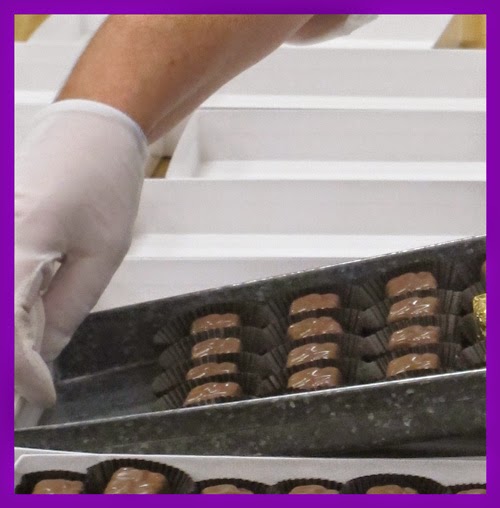
You’ve made a delicious product covered in chocolate and now it is time to package it. Have you considered how the temperature of the packaging room or area will affect your product?
This week’s tip is to control the temperature of your packaging room or area in order to protect the integrity of your products. Oftentimes the focus of room temperature is on the cooking or kitchen area but the temperature and relative humidity of the packaging area is important as well. For example, conditions with high humidity will lead to moisture condensation which will eventually result in sugar bloom on the product’s surface. Additionally, conditions that are too warm could melt your products.
Confectionery experts recommend that the packaging area be maintained at 65° to 70°F with a relative humidity of maximum 65 percent. To help with control, install a thermometer that measures both temperature and relative humidity and assign an employee to check the measurements on a regular schedule.
Temperature control is one of many factors and variables that should be considered as you prepare product for customer distribution. The decisions you make about these items can help to prolong the beauty and shelf life of your confections.
Tags:
Candy Making
GMP's
Packaging
Quality Control
Permalink
| Comments (0)
|
|
|
Posted By RCI,
Tuesday, March 11, 2014
Updated: Thursday, April 30, 2020
|
This week’s tip will help keep you on track for quality control. Take a sample of every product, label appropriately (lot code, date, etc.) and freeze it for a set amount of time. Then, if a customer calls and complains for any reason about your products, you have a frame of reference to be able to say this is the condition the product was in when it left our facility.
One RCI member does this and has a ziplock bag for each day. The company keeps the product for four months and then discards it. Regardless of how long you choose to keep the product, be sure that you have a system for organizing it within your freezer so that you can easily find the items and then also easily discard of them when the time period for keeping them has passed.
P.S. This week’s tip is from our Chocolate Boot Camp education course. Learn more about education courses offered by Retail Confectioners International at www.retailconfectioners.org/events.
Tags:
Candy Making
GMP's
Quality Control
Permalink
| Comments (0)
|
|
|
Posted By RCI,
Tuesday, February 25, 2014
Updated: Thursday, April 30, 2020
|
Looking to master moulding? We have a tip this week from the RCI Mechanics of Chocolate Moulding course held last September.
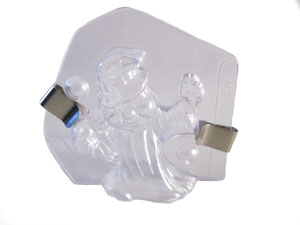
Moulds should be slightly cooler than the temperature of the chocolate you are putting into the mould. If your mould is too cold it will shock the chocolate and if it is too warm it will break the temper of the chocolate. Therefore, you should measure the temperature of your moulds before pouring chocolate into your moulds.
How do I measure the temperature of my moulds, you might ask? By using a thermometer, of course! Infrared thermometers measure the surface temperature of plastics and therefore are great for measuring your plastic moulds. A good rule of thumb is to aim for around 85 degrees Fahrenheit.
A variety of infrared thermometers are available for purchase online. The following companies are listed under Machinery & Equipment (subcategory: Utensils) in the RCI Buyer’s Guide and may also have the thermometer that you need for your candy kitchen:
Chef Rubber
ChocoVision Corp.
Hilliard’s Chocolate System
International Foods & Ingredients, Inc.
Linnea’s Cake & Candy Supplies, Inc.
Savage Bros. Co.
Union Confectionery Machinery
RCI members can access the RCI Buyer’s Guide online by signing in to the member side of the RCI website.
Tags:
Candy Making
GMP's
Moulds
Suppliers
Permalink
| Comments (0)
|
|
|
Posted By RCI,
Tuesday, January 14, 2014
Updated: Thursday, April 30, 2020
|
You’re very diligent to clean fingerprints and smudges on the front of your candy cases but have you given thought to how often you clean the inside of your cases and other fixtures? This week’s tip is to remind you that cleaning behind fixtures is just as important as cleaning the front of cases and fixtures.
As you know, presentation matters when it comes to displaying your beautiful chocolates and candies in the store. You may not think the inside of your cases would get dirty but dust could collect there in addition to smudges from moving product in and out of the case. A pristine case will help increase the perceived value of your products so take the time to ensure it is clean both inside and out.
How often should you clean the inside of your cases? That depends on how often the doors to the cases are opened, when product is moved, etc. Whatever you decide, be sure it is added to the cleaning schedule so employees don’t overlook this important task.
P.S. This tip was from the GMP series featured in the Jan/Feb/Mar 2012 issue of Kettle Talk. RCI members may access the entire series by signing in to the RCI website and viewing Kettle Talk issues from 2012.
Tags:
Cleaning
GMP's
Merchandising
Quality Control
Permalink
| Comments (0)
|
|
|
Posted By RCI,
Tuesday, October 29, 2013
Updated: Thursday, April 30, 2020
|
Your customers expect that each time you make a product that it will look and taste the same way as when they purchased it the last time. Your product is just as good as the ingredients you use to make it. Therefore, this week’s tip is to require your suppliers to be consistent with their own products.
Many times we hear from small businesses that they don’t feel they have the ‘clout’ to demand anything from their suppliers because of their size. However, we always remind those businesses that their own livelihood and success is dependent on the quality of their raw materials. Therefore, as a paying customer they have just as much right as any other business to require a consistent product from their suppliers.
As part of requiring consistency of your suppliers, be sure to regularly test each supplier shipment for consistency in characteristics such as taste, size and odor. Remember, if your raw materials and suppliers are dependable, you increase the chances of your finished product being consistent as well. And a consistently delicious product will keep your customers coming back for more!
This tip was inspired by an article in our Good Manufacturing Practices series found in all four 2012 issues of Kettle Talk. RCI members may access past issues of Kettle Talk by signing in as a member on the RCI website.
Tags:
Candy Making
GMP's
Owning a Business
Quality Control
Permalink
| Comments (0)
|
|
|
Posted By RCI,
Tuesday, May 14, 2013
Updated: Thursday, April 30, 2020
|
We have a quick Good Manufacturing Practices tip for you this week. When you receive pallets of chocolate or the 10-pound bars of chocolate from your chocolate supplier, you need to break them into smaller pieces to melt down and create your store’s confections. How do you go about doing that?
Many candy makers will break the chocolate into smaller pieces by smashing it with a hammer. However, if you are using a wood handled hammer, you risk the wood chipping off in the process and small shreds of wood landing in your chocolate. Additionally, if you are using a rubber handled hammer, it likely has small crevices in it that can easily hold chocolate and create bacteria as time goes on.
Therefore, this week’s tip is to use a stainless steel or titanium crowbar to break your chocolate into pieces for melting. It is still a good idea to clean the crowbar on a regular basis, but with no other element such as wood and rubber on the bar, it will be much easier to ensure it is completely clean and sterilized and ready for safe use with food.
P.S. This tip was shared during our recent Chocolate Boot Camp. View photos of this RCI education course on our Facebook page!
Tags:
Candy Making
Cleaning
GMP's
Quality Control
Permalink
| Comments (0)
|
|
|
Posted By RCI,
Tuesday, February 26, 2013
Updated: Thursday, April 30, 2020
|
Now that you’re finished with those Valentine’s Day moulds, it’s time to clean and put them away until the next holiday season. Be sure to follow these steps courtesy of RCI associate supplier member Tomric Systems, Inc. to take the best care of your moulds:
Because moulds are made of plastic, upkeep is minimal. At the end of the season, moulds need to be washed, well rinsed, dried and stored in a cool, dry location. If maintained, the moulds will have a shiny finish and release a nicely glossed piece of chocolate.
- Wipe with soft cloth in clear, warm water.
- DO NOT use an abrasive cleanser. If moulds become coated with cocoa butter, wash with a mild grease-cutting detergent. Use detergent sparingly and avoid scratching the inside surface of the moulds.
- Rinse in clear, cool water.
- Dry and store in a cool location.
- Use moulds at room temperature.
RCI Members: Our recent Kettle Talk publication contained an article with these step-by-step instructions. Access this and other member-only Kettle Talk articles by signing in to the RCI website as a member.
Tags:
Candy Making
Cleaning
GMP's
Quality Control
Permalink
| Comments (0)
|
|
|
Posted By RCI,
Tuesday, January 29, 2013
Updated: Thursday, April 30, 2020
|
No electricity. It can happen to anyone, right? Whether it’s 100 degrees outside and the AC units get overheated, or it’s 10 degrees outside and you lose power due to a snow or ice storm, no power can be detrimental for chocolate and candy makers. So this week’s tip is to invest in a generator for your business so you have access to back-up power.
Generators are gas or diesel-powered devices, which provide temporary electrical power. Whether it means keeping your store cool so chocolates don’t melt or keeping the tempering machine running so your employees can keep making product to fill shelves at Christmas-time, having a back-up generator is sure to save you a potential headache.
So, how do you choose a generator for your business?
- The type of generator you want depends on the purpose. Portable generators are good for providing relatively small amounts of electricity for remote use or back-up systems. Learn some of the basics of generators at FindGenerators.net.
- Take your existing power availability into account for larger models of generators (tip: check your electricity bill to get an idea of the power you use). Consider things like power output, maintenance and fuel costs when deciding which generator is best for your business.
- View a video and in-depth buying guide covering generator types, features, and wattage requirements at Consumer Reports.
- Find generator usage tips here, and then check out safety and related generator information at Red Cross, including buying the right model for your utility restrictions, proper maintenance and refueling tips.
Now, if you lose power, you (and your chocolates) won’t be left out in the cold (or heat)!
If you have tips or experience with buying generators for your business, share them with fellow readers in the comments below.
Tags:
GMP's
Owning a Business
Productivity
Permalink
| Comments (0)
|
|
|
Posted By RCI,
Tuesday, December 11, 2012
Updated: Thursday, April 30, 2020
|
Most candy makers would probably agree it’s easier to keep a super-clean facility when the bows and boxes aren’t flying during the holiday season. But how is your staff doing with keeping the cleaning schedule when there seems to be no extra time in the day?
One way to stay on top of this is to test the cleanliness of your facility on a regular basis. We don’t mean a visual test where you look to see if the area appears clean but an actual scientific test for allergens, sanitation, etc.
You can buy sample test kits and do an on-site test of a variety of areas in your production zone. During one of our recent Kettle Talk panel forums, a member recommended buying sample test kits from Neogen. Using their food allergen tests you can do on-site tests to detect the target allergen ( see list of allergens here) in ingredients, liquids, clean-in-place rinses, finished foods, and on environmental surfaces. They also have sanitation tests to detect the amount of food residue and other organic matter, such as bacteria, yeast and mold, that may remain after cleaning.
Please note this is just one company that was recommended from one member to another at our event and others are likely available to you by searching online. If you also want to send swabs off to a lab to be thoroughly tested, Silliker Labs, who presented at the 2012 RCI Spring Regional event, also provides food testing and sanitation information for confectioners and food facilities.
Do you have other tips for maintaining a clean food facility in the midst of your busiest production schedules? Please share with our blog community in the comments below!
RCI Members: Access additional materials on Good Manufacturing Practices on the member side of the RCI website. Our new website being revealed in January will have a page dedicated to just this topic.
Tags:
Candy Making
Cleaning
GMP's
Holidays
Owning a Business
Quality Control
Seasonal
Permalink
| Comments (0)
|
|
|
Posted By RCI,
Tuesday, October 30, 2012
Updated: Thursday, April 30, 2020
|
Oftentimes the most random items or places provide inspiration for great ideas. That’s the case with this week’s tip that was originally shared by one of our candy making members in Candy Clinic, an idea-sharing session at our Annual Convention.
This member discovered that magnetic tape can be a great organizing tool. Many candy makers and businesses have metal shelving and storage units. Rather than using sticker labels which leave a residue and are difficult to replace, she found a great use for magnetic tape which can be purchased at retailers such as Wal-Mart for as little as $8 for a 20 foot roll. They use the tape to label storage shelves, etc. which makes it easy to move items around as needed and just peel the magnetic tape and restick.
Do you have a great labeling or organizing solution to share? Leave us a comment below!
RCI Members – Did you know you can watch past Candy Clinic videos on the member side of the RCI website under the ‘Candy Clinic’ tab?
Tags:
Annual Convention
Cleaning
GMP's
Organizing
Owning a Business
Productivity
Permalink
| Comments (0)
|
 Print Page
 Blog Home
 All Blogs
 RSS
RSS